Online Card Games: Rules, Strategies, and Tips for Beginners
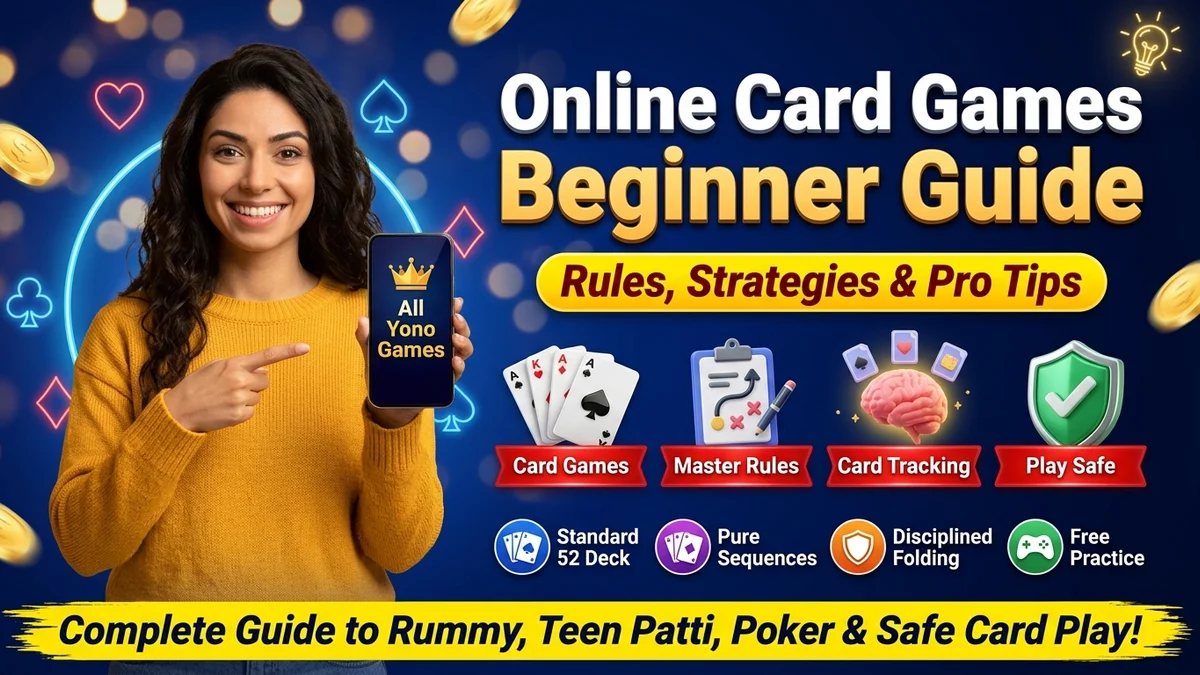
Card games have been part of everyday life for centuries, from family evenings around a table to quick rounds during a train journey. Moving them online hasn't changed what makes them fun: a little luck, a little skill and a lot of friendly competition.
If you're new to online card games and want to know where to begin, this guide covers the most popular games, their basic rules, simple strategies and the habits that will make you a better, safer player.
Why Online Card Games Are So Popular
Part of the appeal is how familiar they feel. Most of us learned a card game as children, so there's no steep learning curve. Online versions add convenience: you can play at any hour, find opponents instantly and practise without needing a full table of friends.
They're also easy on your device. Most run smoothly on budget phones, rounds are short and you can pick up and put down a game whenever you like.
The Basics: Understanding a Standard Deck
Most card games use a standard 52-card deck divided into four suits: Hearts (♥), Diamonds (♦), Clubs (♣) and Spades (♠). Each suit contains 13 cards ranging from Ace through 2 to 10, Jack, Queen and King.
Some games add jokers (printed or wildcards) or use multiple shuffled decks. Knowing the ranking of cards and suits is the foundation for everything else, so make sure you're comfortable with it before moving on.
Popular Online Card Games and Their Rules
Rummy
Rummy is a long-time favourite in India. In the common 13-card version, each player is dealt 13 cards. On your turn you draw a card from the closed deck or the discard pile and then discard one card. The goal is to arrange your hand into valid combinations:
- Sequences: three or more consecutive cards of the same suit.
- Sets: three or four cards of the same rank but different suits.
You usually need at least two sequences, one of which must be "pure" (meaning it has no joker). When your hand is arranged correctly, you declare and the round ends. Other players are scored on the unmatched cards left in their hands.
Teen Patti
Often called Indian poker, teen patti uses three cards per player. Hands are ranked from strongest to weakest roughly as follows: trail (three of a kind), pure sequence, sequence, colour (same suit), pair and high card.
Players bet in turns and can fold, call or raise. It's quick and social, but it's also a game where betting decisions matter as much as the cards.
Poker (Texas Hold'em)
Each player gets two private hole cards, and five community cards are dealt face up over several rounds of betting. You build the best five-card hand from your own cards and the shared ones. Poker rewards patience, reading opponents and understanding probability.
Solitaire
A single-player classic. You move cards between piles to build suits in order from Ace to King. It's relaxing, needs no opponent and is great for learning basic card-handling logic.
Hearts and Spades
These are trick-taking games. In Hearts, you try to avoid collecting hearts and the queen of spades. In Spades, partners bid how many tricks they expect to win and try to hit that number. Both teach planning and card counting.
Blackjack
The goal is to get as close to 21 as possible without going over, while beating the dealer's hand. It's simple to learn, though like all casino-style games it's built so the house has an edge over time.
Simple Strategies That Actually Help
No strategy wins every hand, because luck always plays a part. But good habits improve your results over time:
In rummy, note which cards have been discarded. In hearts or spades, track which high cards have already been played. Memory is one of the most powerful skills you can build.
In rummy, early on, discard high-value cards that don't fit your hand to reduce penalty points. Avoid discarding cards your opponent has clearly been collecting.
In rummy, securing a pure sequence early gives your hand structure and protects you from heavy penalties.
Notice which cards they pick up and discard. Patterns reveal what combinations they're building.
If a hand needs a very specific card, consider changing your plan instead of waiting endlessly for luck.
In betting games like poker and teen patti, folding a weak hand is not defeat, it's discipline. Staying in every hand is one of the most common beginner mistakes.
Emotional decisions after a loss usually make things worse. Take a breath and reset your mind.
How to Practise
- Start with tutorials and practice modes to learn the rules and interface without pressure.
- Play against bots or in casual rooms where nothing is at stake.
- Review rounds afterwards. Where did you hold a card too long? When did you bet too much?
- Play with friends and family. Private rooms recreate the traditional card table experience from anywhere.
- Watch experienced players explain their decisions in instructional videos or livestreams.
Skill, Luck and Real Money: Be Honest With Yourself
Card games mix skill and chance in different amounts. Solitaire is mostly skill. Teen patti and blackjack lean more heavily on luck and betting decisions. Over many rounds, skill helps, but a single hand can go either way.
This matters because many apps offer these games with real money attached, including various All Yono Games style rummy and slot apps. It's important to understand that even skilled players can lose, and that many platforms are designed around deposits and repeat play.
There's also the legal angle. India's Promotion and Regulation of Online Gaming Act, passed in 2025, prohibits online games played with real money, covering both skill and chance, and authorities have continued to enforce it. Free-to-play card games without cash stakes are treated differently. For advice on your own situation, consult a qualified lawyer.
The simplest approach for beginners is to play free-to-play versions from official app stores. You get all of the learning and fun with none of the financial risk.
Staying Safe Online
- Download only from official stores: APKs from random links can carry malware and spyware.
- Check permissions: A card game doesn't need access to your contacts, SMS or call logs.
- Protect your OTPs and PINs: No genuine card game ever needs your UPI PIN or banking passwords.
- Be wary of guaranteed winnings: Guaranteed earnings or aggressively pushed referral schemes are classic warning signs.
- Set limits on time and money: Always decide in advance how long you will play and stick to it.
- Take regular breaks: Long marathon sessions blur judgement and make impulsive choices much likelier.
If playing ever starts to feel compulsive, or you find yourself chasing losses, talk to someone you trust or a counselor. Stepping back early is far easier than later.
The Bottom Line
Online card games are a wonderful way to relax, sharpen your mind and connect with friends. Learn the rules of one game at a time, practise in low-pressure settings, build habits like card counting and disciplined folding, and keep your play free of financial stakes. That combination keeps the games fun, which is the whole point.
Frequently Asked Questions
Quick answers to the most common beginner questions about All Yono Games.
1. Which online card game is best for beginners?
Solitaire and rummy are good starting points. Solitaire has simple rules and needs no opponent, while rummy teaches sets, sequences and planning, and is widely available in free-to-play versions.
2. Are online card games based on skill or luck?
Both, in varying amounts. Games like rummy, hearts and spades reward skill over many rounds, while games like blackjack and teen patti involve more chance and betting decisions. Luck can swing any single hand.
3. How can I get better at online card games?
Learn the rules thoroughly, practise in free or casual modes, remember which cards have been played, watch your opponents and review your mistakes after each session.
4. Is it safe to play card games for real money online?
It carries financial, security and legal risks. India's 2025 gaming law prohibits online games played with real money, including skill-based ones, and many unofficial apps have unclear operators and withdrawal problems. Free-to-play games are a safer choice.
5. Where can I play online card games for free?
Official app stores such as Google Play and the App Store have many free-to-play card games from established developers. You can also play with friends and family using private rooms and virtual chips.
Looking for Verified Games?
Explore our full catalog of verified game guides, APK details, and honest reviews.