How to Improve Your Online Gaming Skills: Beginner Tips
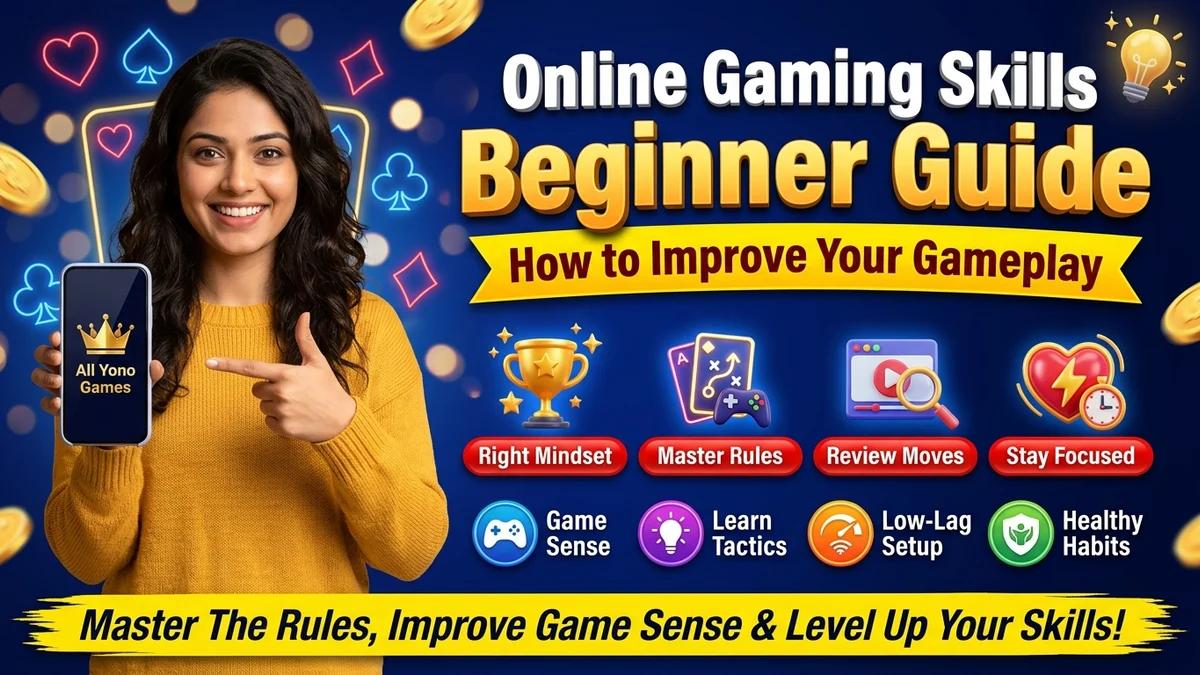
Everyone remembers their first few weeks of an online game. You lose a lot, you wonder how other players seem to know exactly what they're doing, and you quietly suspect they were born with faster fingers. The good news is that gaming skill is mostly built, not inherited. With a bit of structure and patience, almost anyone can get noticeably better in a matter of weeks.
This guide is for beginners who want to improve at online games, whether that's a card game like rummy, a strategy title, a shooter or a casual puzzle app. The tips below apply across genres, and they're built around habits that actually work rather than hype.
Start With the Right Mindset
Before any technique, there's the question of how you think about losing. Beginners often treat every defeat as proof they're bad. Better players treat it as information.
After a loss, ask a simple question: what's one thing I could have done differently? Not ten things, just one. That small shift turns frustration into progress, and it keeps you from tilting—the gamer term for letting a bad round wreck your next one.
Also, set realistic expectations. You will not be great in three days. You can absolutely be noticeably better in three weeks.
Learn the Rules Properly
It sounds obvious, but a surprising number of players skip this. Spend time in tutorials, practice modes and the in-game help. Know exactly how scoring works, what each action does and what ends a round.
For card games, that means understanding hand rankings, valid sets and sequences and how discards work. For strategy or action games, it means learning controls, objectives and basic mechanics. Players who know the rules cold make fewer silly mistakes, and silly mistakes are where most beginners lose.
Practise in Low-Pressure Settings
Playing only high-stakes or ranked matches is like learning to swim in the deep end. Start with practice modes, casual lobbies or games against bots. Without pressure, you can experiment, try new approaches and make mistakes cheaply.
If you play games with real money attached, think carefully about whether you should be playing them at all, and we'll come back to that below. For building skill, free-to-play versions of the same games are ideal, since the lack of financial pressure lets you focus on learning.
Watch Better Players
One of the fastest ways to improve is to watch people who are better than you. Streams, recorded matches and tutorial videos show decision-making you wouldn't think of yourself. Pay attention to why they do things, not just what they do.
Try this: pause a video before a key decision and guess what the player will do. Then see what happened and why. It trains your judgement far faster than passive viewing.
Review Your Own Games
Many games let you replay or review past rounds. If yours does, use it. If it doesn't, jot down quick notes after a session. What went wrong? What worked? Patterns appear quickly.
You might notice you always rush in the early game, hold on to weak cards too long or ignore your teammates. Keeping a small notes file on your phone takes two minutes and pays off enormously.
Focus on One Skill at a Time
Trying to improve everything at once leads to improving nothing. Pick a single focus for each session. It might be your aim, your timing, your card memory or your map awareness. Practise that one thing deliberately, then move on.
This is the difference between playing a lot and practising well. Hours of unfocused play can leave you stuck at the same level for months.
Build Good Game Sense
Game sense is the ability to read what's happening and anticipate what comes next. It develops with experience, but you can speed it up:
Opponents repeat habits. Spotting their routines and rhythms gives you a distinct tactical edge.
In card games, remember what has been discarded. In team games, keep track of cooldowns and resources.
Always ask yourself what your opponent will likely do immediately after your current move.
Don't cling stubbornly to an initial plan that clearly isn't working as the round develops.
Take Care of Your Setup
Skill isn't only in your head and hands. Practical issues can quietly hold you back:
A stable internet connection prevents lag and disconnections. Use Wi-Fi where you can and close other apps that hog bandwidth.
Keep your phone or PC updated, with enough free storage and battery. Games stutter when devices are struggling.
Adjust sensitivity, button layout and screen brightness until they feel natural. A comfortable setup helps you play more consistently.
Reduce noise and distractions so you can concentrate fully on your decisions.
Look After Yourself
This is the most underrated tip of all. Tired, hungry or stressed players make worse decisions. Get enough sleep, drink water, take short breaks every 45 minutes or so and stretch.
Long marathon sessions lead to diminishing returns and, often, a worse mood. Set a time limit before you start, and stick to it. Quitting while you're still enjoying the game is a skill too.
Be a Good Teammate
If your game is multiplayer, how you treat others affects how you play. Communicate clearly, avoid blame and mute toxic players.
Positive communities are easier to learn in, and you'll find friendly players happy to share advice. Joining a group, forum or Discord server for your favourite game can accelerate learning and make it far more fun.
A Word of Caution About Real-Money Games
Some beginners are drawn to apps that promise cash rewards for good play, including many of the All Yono Games style rummy and slot apps. It's worth being clear-eyed here. Improving at a game and winning money from an app are very different things. Many of these platforms are designed around deposits and engagement, and even skilled players can lose money.
There's also a legal dimension. India's Promotion and Regulation of Online Gaming Act, passed in 2025, prohibits online games played with real money, covering both skill and chance, and authorities have continued to enforce it.
Free-to-play games and recognised e-sports are treated differently. If you want to turn your skills into something more, e-sports, streaming, coaching and content creation are far safer routes. For advice on your own situation, consult a qualified lawyer.
Know When to Step Back
If gaming is causing stress, affecting your sleep, money or relationships, or you feel unable to stop, that's a sign to pause. Talk to someone you trust or a counselor. Skills can always be rebuilt later. Your wellbeing comes first.
The Bottom Line
Improving at online games comes down to a handful of repeatable habits: know the rules, practise in low-pressure settings, learn from better players, review your mistakes, focus on one skill at a time and look after your body and mind. None of it needs talent or expensive gear. It just needs a little deliberate effort and a healthy attitude towards losing.
Frequently Asked Questions
Quick answers to the most common beginner questions about All Yono Games.
1. How long does it take to get better at an online game?
Most beginners notice real improvement within two to four weeks of focused practice. Becoming truly strong in a competitive game can take months, depending on the game and how deliberately you practise.
2. What's the best way to practise as a beginner?
Use tutorials, practice modes or casual matches, focus on one skill per session and review your mistakes afterwards. Watching experienced players explain their decisions also helps.
3. Does playing more hours automatically make me better?
No. Unfocused play can leave you stuck. A shorter session with a clear goal, such as improving your timing or card tracking, usually does more than hours of autopilot play.
4. How do I stop getting frustrated when I lose?
Treat each loss as information. Pick one thing to improve, take a short break after a bad round and avoid playing when you're tired or upset.
5. Can I make money from improving my gaming skills?
Yes, but through safe routes such as e-sports, streaming, coaching or content creation. Real-money gaming apps carry financial, legal and security risks, and improved skill doesn't guarantee winnings.
Looking for Verified Games?
Explore our full catalog of verified game guides, APK details, and honest reviews.